


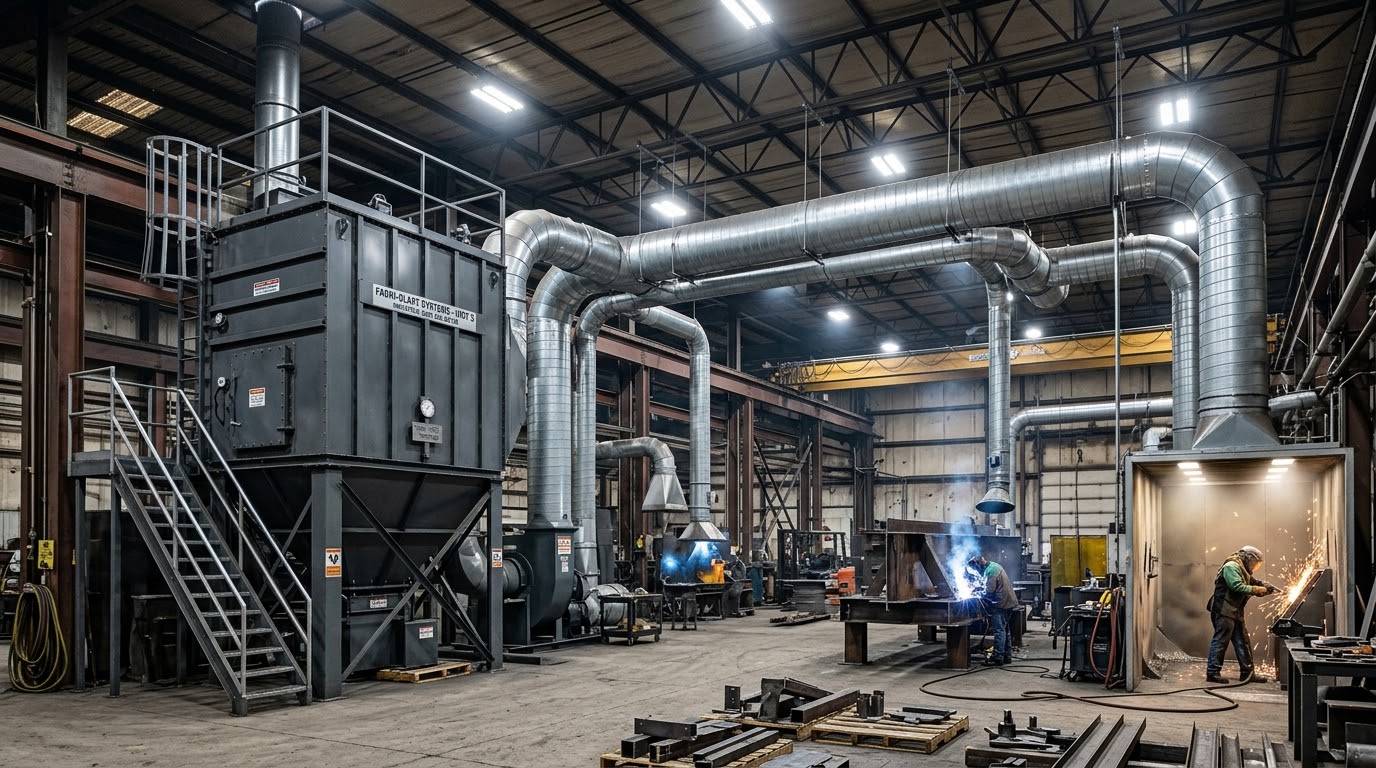
An abatement system upgrade directly improves operational safety, air quality, and regulatory compliance for heavy-duty industrial blasting facilities. Old dust collectors, worn ductwork, and outdated filtration units struggle to capture fine particulates generated by modern abrasive media. Facilities dealing with declining static pressure or tightening emissions limits cannot rely on legacy equipment. Investing in a targeted dust collector retrofit breathes new life into your ventilation infrastructure without forcing a total facility redesign.
Industrial surface preparation generates massive volumes of dust, spent abrasive, and hazardous airborne particles. When your ventilation fails to keep pace, visibility drops inside the blast room and maintenance costs skyrocket. A proactive engineering review identifies bottlenecks in your airflow, motor sizing, and pulse-cleaning mechanisms.
Signs Your Facility Needs an Abatement Upgrade
Recognizing the tipping point between routine maintenance and a full abatement system upgrade prevents costly unplanned shutdowns. Dust collection equipment degrades gradually, making performance drops easy to miss until inspectors flag your facility.
- Declining Static Pressure:Gauges show drops across the collector, meaning air isn’t pulling through the blast enclosure effectively.
- Fugitive Dust Emission:Fine particulate escapes around door seals, conveyor pits, and exhaust stacks during active blasting.
- Frequent Filter Blinding:Cartridges or filter bags load up too quickly, requiring constant manual cleaning or premature replacement cycles.
- Regulatory Warnings:Local air quality boards or OSHA audits point out elevated indoor or outdoor particulate counts.
Ignoring these warning signs leads to motor burnout, employee health hazards, and potential fines. Modernizing your air filtration setup protects both your workforce and your operational bottom line.
Core Components of a Dust Collector Retrofit
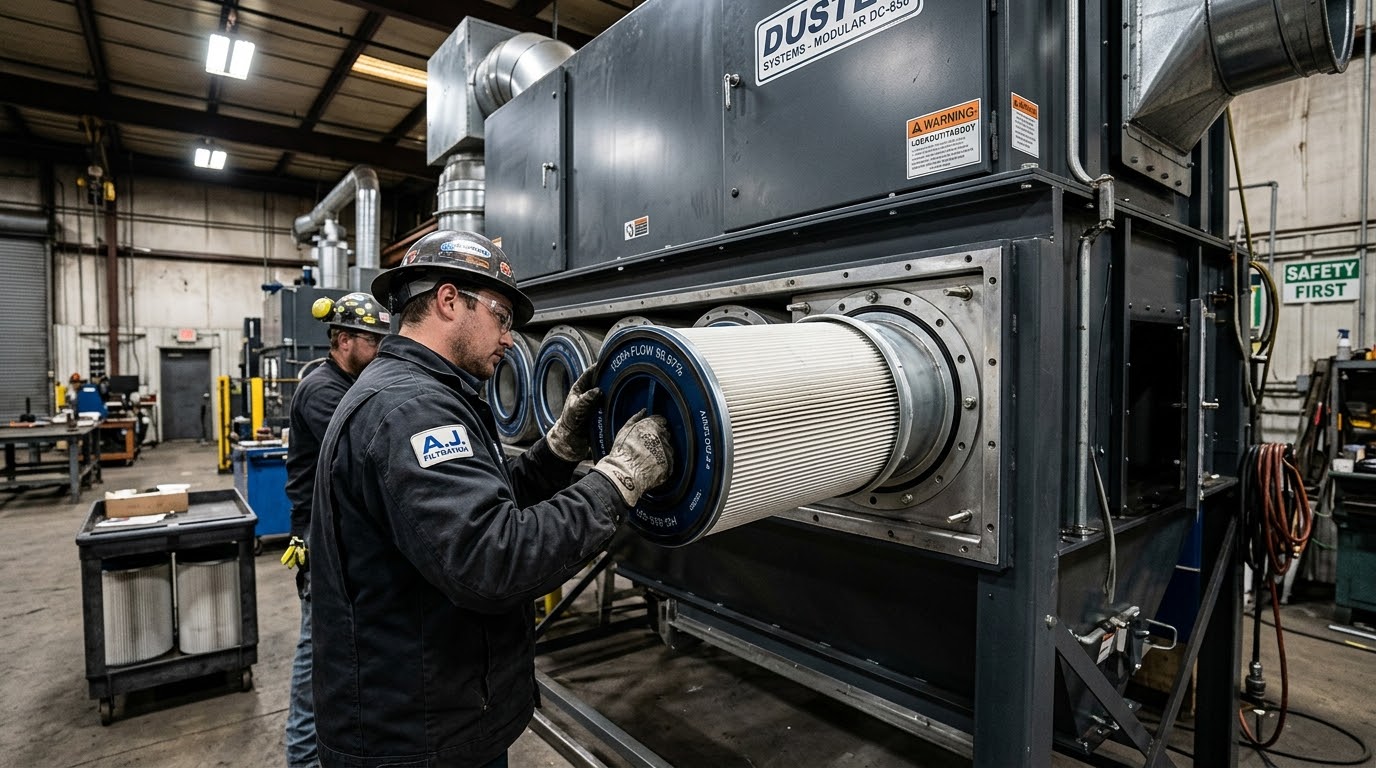
A proper equipment overhaul goes beyond swapping out dirty filters. Modernizing an industrial dust system involves upgrading specific mechanical and electrical components to handle higher cubic feet per minute (CFM) demands.
1. Filter Media Transition
Moving from traditional cellulose bags to nanofiber cartridge filters increases surface area and capture efficiency for sub-micron dust particles. This change alone frequently solves chronic airflow restrictions.
2. Fan and Motor Optimization
Legacy blowers often run inefficiently at fixed speeds. Installing variable frequency drives (VFDs) matches fan output to actual operational load, reducing electrical draw while maintaining required capture velocities at the blast nozzle.
3. Pulse-Cleaning Controls
Upgrading old timer boards to solid-state differential pressure controllers ensures cleaning cycles trigger only when filters actually require it. This extends filter life and conserves compressed air.
Integrating Ventilation with Media Reclamation
Effective air filtration works hand in hand with your material handling. When you tie your dust collection overhaul into your broader facility design, you optimize both media longevity and visibility. Clean air pulls spent abrasive, dust, and debris efficiently toward your mechanical or pneumatic blast recovery systems. Without proper airflow balance, broken abrasive accumulates in the blast pot and clogs metering valves, turning a minor filtration issue into a complete line stoppage.
Alternatives
When evaluating how to handle failing air filtration, facility managers generally weigh three distinct approaches:
- Complete System Replacement:Tearing out the old dust collector and installing a brand-new, turnkey unit engineered for higher capacity.
- Targeted Retrofit:Upgrading internal components—such as fans, valves, filters, and controls—within the existing structural housing.
- Band-Aid Maintenance:Simply replacing failed filter bags with identical units and patching ductwork as leaks appear.
Comparison
| Approach | Capital Investment | Downtime Required | Expected Lifespan | Compliance Impact |
|---|---|---|---|---|
| Complete Replacement | High | High (1-2 weeks) | 15-20 years | Maximum |
| Targeted Retrofit | Moderate | Low (2-4 days) | 7-10 years | High |
| Band-Aid Maintenance | Low | Minimal | Months | Low |
Choosing the right path depends on the structural integrity of your current collector housing and your long-term production goals. For many operations, integrating upgraded dust control alongside modern paint and coating solutions provides the ideal balance of performance and budget control.
Securing Your Facility’s Air Quality
Modern industrial finishing demands robust environmental controls that keep pace with rigorous environmental standards. Waiting for equipment failure disrupts production schedules and exposes your team to unnecessary health risks. A strategic modernization plan eliminates bottlenecks and secures your operating permits for years to come.
JH Norton provides expert engineering assessments, custom retrofits, and comprehensive equipment maintenance for industrial facilities throughout our service region. Contact our team today to schedule an evaluation of your current dust collection infrastructure.
