


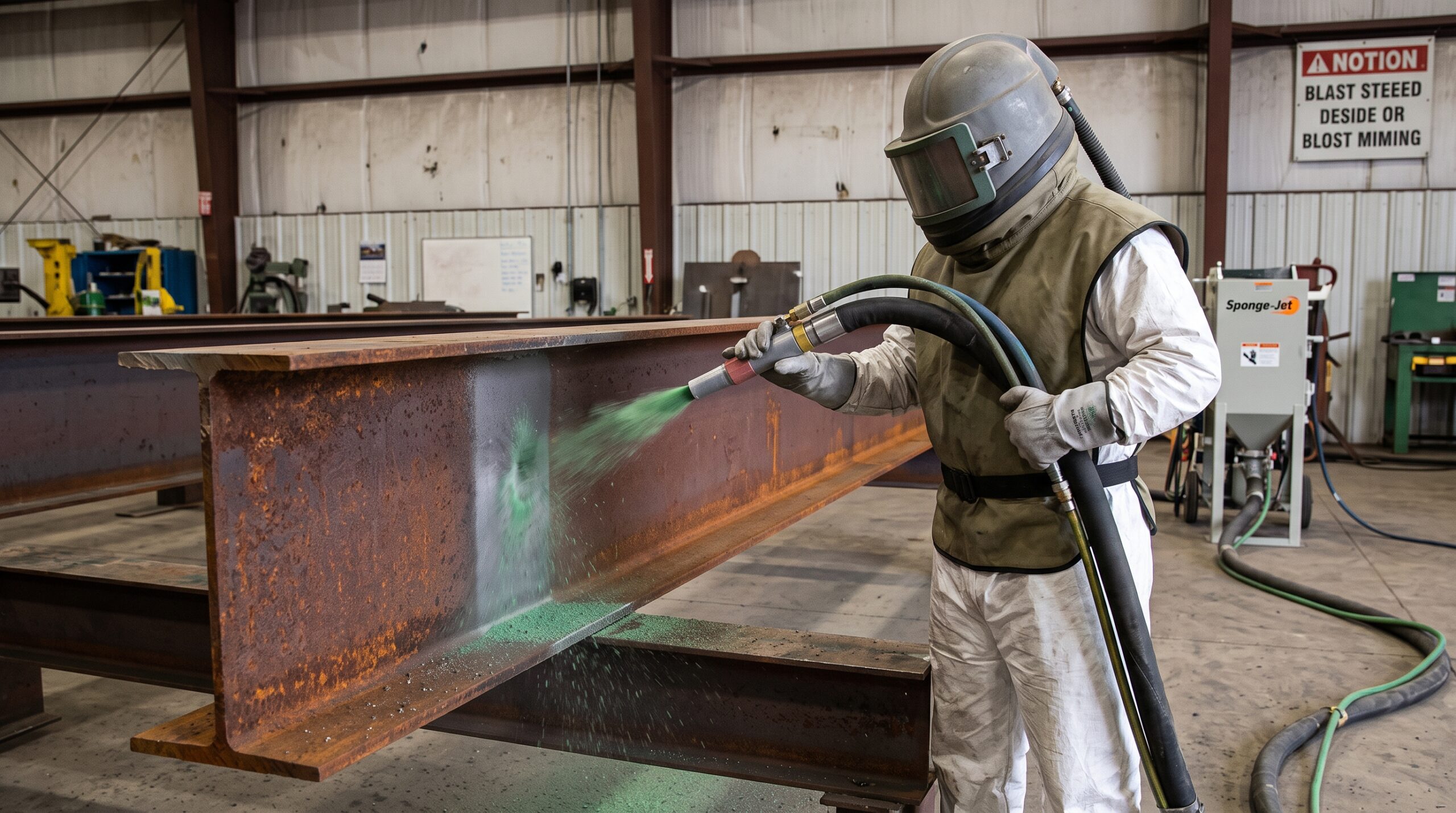
To successfully integrate abrasive sponge into surface preparation workflows, facilities must calibrate equipment air pressure, utilize compatible metering hardware, and modify media recovery procedures to account for the unique compressible nature of polyurethane-encased media. Traditional mineral grit relies purely on high-velocity impact, but sponge media introduces a foam carrier that changes how operators handle media feed, dust suppression, and cleanup. Transitioning a production floor or field crew to this method eliminates many standard bottlenecks associated with containment and particulate drift.
Industrial surface preparation demands a careful balance between production speed, profile depth, and environmental compliance. When regulations tighten or facility downtime costs escalate, standard aggregate blasting often creates secondary problems like massive dust plumes and difficult cleanup. Operators need methods that deliver aggressive anchor patterns without shutting down adjacent operations. That is where a structured approach to sponge media integration pays off.
Understanding the Mechanics of Abrasive Sponge
Abrasive sponge consists of a hard grit particle bonded inside an open-cell polyurethane foam matrix. Upon striking a substrate, the foam collapses, driving the abrasive grain against the surface to cut or profile. The foam immediately rebounds, creating a wiping action that traps loose paint chips, rust, and shattered media particles before they can escape into the atmosphere.
This mechanism changes the physics of the blast stream. Because the foam cushions the impact, particle rebound decreases dramatically. Operators can work closer to sensitive equipment, glass, and adjacent coatings without causing unintended collateral damage. Understanding this behavior helps crews adjust standoff distances and travel speeds during the initial transition phase.
Assessing Equipment and Hardware Compatibility
You cannot simply dump compressible sponge into every existing blast pot on your shop floor. Proper workflow integration begins with a thorough audit of your hardware. Standard pinch-tube valves often chew up or jam on polyurethane media.
Your setup requires specific adjustments to handle the larger, lighter, and more elastic particles:
- Pot Metering Valves: Upgrade to high-performance valves designed to meter compressible materials without bridging or clogging.
- Nozzle Selection: Use venturi nozzles sized appropriately for the specific sponge media density and grit type.
- Air Supply \& Moisture Control: Ensure your bulk air dryers operate at peak efficiency. Excess moisture degrades the foam bonding agents prematurely, leading to clogs in the pickup tube.
Many operations choose to invest in dedicated sponge blasting systems to keep standard mineral grit lines separate from polyurethane media lines, avoiding cross-contamination and reducing changeover times between projects.
Step-by-Step Workflow Integration Process
Moving from conventional media to an integrated sponge process requires a controlled rollout. Rushing the transition leads to frustrated operators and underperforming blast patterns.
- Conduct a Substrate Audit: Identify current profile requirements, coating thicknesses, and environmental restrictions on your active job sites.
- Configure the Blast Pot: Set up a clean, dry pressure vessel equipped with the correct metering plate and moisture separators.
- Run Calibration Tests: Test blast a scrap coupon of the target substrate. Adjust air pressure down—usually starting between [PSI] and scale up until you achieve the required surface profile.
- Train the Crew: Teach operators to adjust their angle of attack. Sponge media often performs best at slightly different angles than bare aluminum oxide or steel grit.
- Establish Recovery Protocols: Set up magnetic or mechanical screening stations to separate reusable sponge media from heavy paint debris and dust.
Alternatives
While abrasive sponge offers distinct advantages in dust control and containment, it is not the universal answer for every single industrial cleaning challenge. Facilities must weigh these alternative approaches against their specific project constraints:
- Traditional Mineral Grit: Offers the lowest initial consumable cost and maximum removal rates for heavy mill scale, but requires heavy containment and dust collection.
- Laser Surface Cleaning: Eliminates media consumption and waste disposal entirely, though capital equipment costs remain high and production speeds vary based on coating thickness.
- Ultra-High Pressure (UHP) Water Jetting: Excellent for hazardous environments and spark-free cleaning, but leaves wet substrates that require drying before recoating.
Comparison
| Feature | Abrasive Sponge | Traditional Mineral Grit | Laser Surface Cleaning |
|---|---|---|---|
| Dust Generation | Very low (up to 95% reduction) | Extremely high | None |
| Media Recyclability | Moderate (multiple passes) | Low to none | N/A (no media) |
| Substrate Impact | Cushioned, low rebound | Aggressive, high rebound | Thermal ablation |
| Containment Needs | Minimal | Extensive | Negligible |
| Initial Capital Cost | Moderate | Low | High |
When looking at your broader consumable inventory, sourcing reliable abrasives media and grit remains essential for shops running mixed-method workflows.
Frequently Asked Questions
How do you integrate abrasive sponge into an existing blast workflow?
Integrating abrasive sponge requires adjusting equipment feed rates, utilizing compatible low-pressure pots, and setting up proper media recovery systems to capture and clean the polyurethane-encased abrasive. Crews must also modify their containment strategies, as dust curtains and massive negative air units are often unnecessary with low-dust media.
What equipment changes are needed for sponge media?
Sponge media typically requires specialized metering valves along with distinct nozzle sizes to handle the compressible nature of the polyurethane sponge without clogging. Standard pinch valves often struggle with elasticity, making hardware retrofits a vital step before full production runs begin.
Can abrasive sponge be recycled?
Yes, abrasive sponge media can be classified, cleaned, and recycled multiple times using dedicated media classifiers, significantly reducing per-project consumable costs. Operators run spent media through a trommel or vibrating screen to remove contaminants before reloading it into the blast pot.
How does sponge media reduce dust compared to traditional grit?
The polyurethane foam acts as a physical barrier around the embedded abrasive grain, collapsing upon impact to trap particulate and suppress airborne dust by up to ninety-five percent. This containment happens at the micro-level right at the point of impact, preventing hazardous lead or paint particulate from floating into the air.
Optimizing Your Surface Preparation Operation
Integrating abrasive sponge into your daily surface preparation workflows delivers measurable gains in safety, reduced cleanup labor, and tighter environmental compliance. By matching your equipment valves, training your technicians on proper standoff techniques, and managing media recycling effectively, your shop can take on complex urban or indoor projects that traditional grit makes impossible. To review equipment options or discuss specific substrate challenges for your facility, reach out to JH Norton today.
