


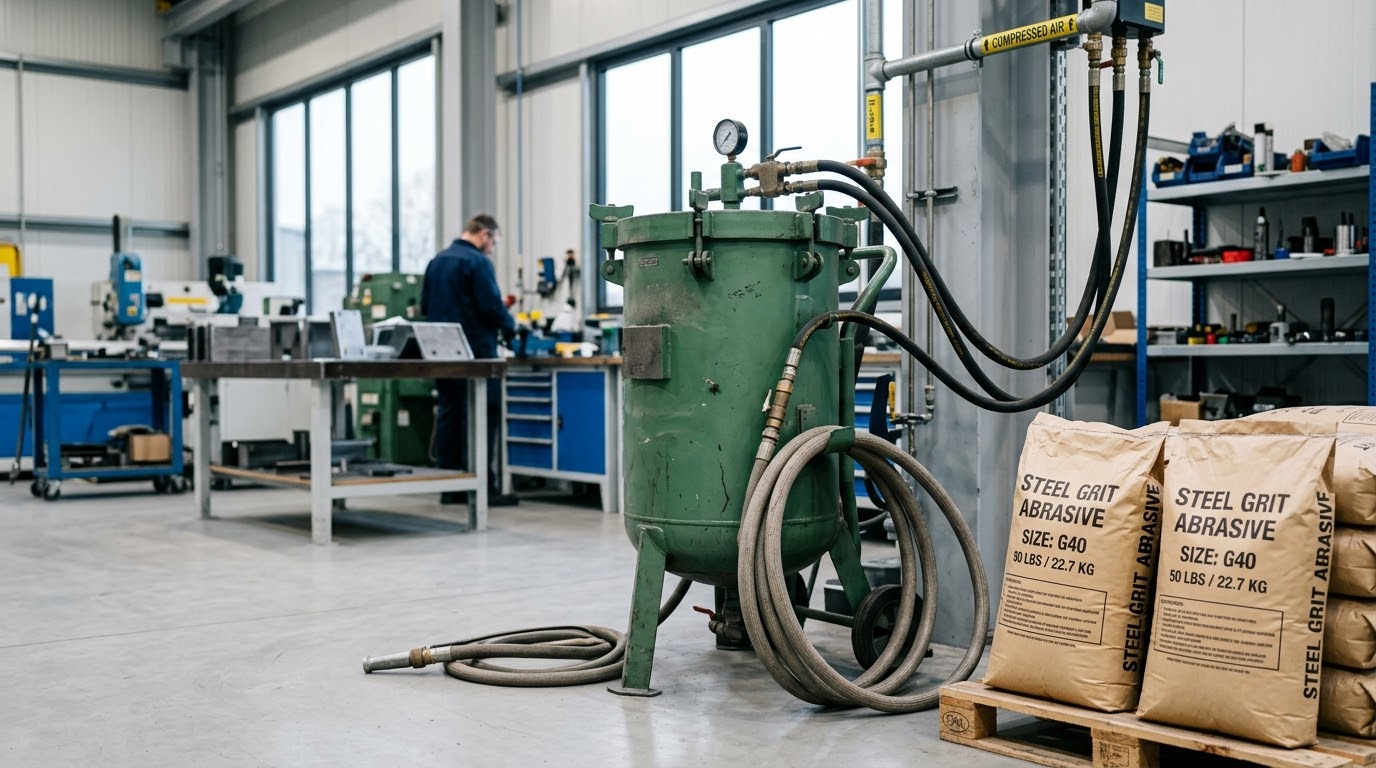
Blast pots are pressure vessels designed to hold abrasive media and meter it into a compressed air stream for surface preparation. Selecting the right vessel dictates your job site productivity, abrasive consumption, and overall coating removal speed. Operators often overlook the direct link between tank plumbing, valve design, and blast hose longevity. Getting this equipment configuration right prevents pressure drops and abrasive surging.
Understanding how these tanks operate under pressure helps maintenance teams reduce downtime. A standard pressure vessel uses a pop-up valve to seal the tank from the inside when pressurization begins. As compressed air fills the vessel, it forces the abrasive downward toward the metering valve. From there, the media enters the air stream at the mixing point and travels out through the blast hose to the nozzle.
Sizing and Capacity Factors
Matching a vessel to your compressor output is the most critical step in equipment selection. A small tank limits continuous blasting time, forcing frequent stops to refill media. Conversely, an oversized tank on a low-CFM compressor starves the nozzle of necessary pressure.
You must calculate your total compressed air volume before choosing tank dimensions. A standard [nozzle requires roughly] \[CFM at 100 PSI]. If your compressor output drops below the combined requirements of the nozzle and the pneumatic controls, production slows instantly. Most contractors balance tank size so a single operator can blast continuously for [minutes before a reload cycle].
Pressure Vessel Components and Plumbing
The internal piping and exterior valves determine how smoothly media flows through your system. High-performance units feature large piping diameters, typically 1-1/2 inch or 2 inch, to minimize friction and pressure loss before the abrasive even hits the hose.
- Pop-Up Valves and O-Rings:These components seal the tank automatically when pressurization starts. Inspect them daily for wear caused by abrasive rebound.
- Abrasive Metering Valves:Flat sand valves, micro valves, and Thompson valves control the exact volume of media entering the air stream. Precision valves pay for themselves by eliminating wasted abrasive.
- Moisture Separators:Water in the compressed air line packs damp media inside the tank, causing clogs. Heavy-duty moisture traps keep lines dry in humid field conditions.
Remote Controls and Safety Systems
Modern operations demand instantaneous shutdown capabilities at the nozzle. Pneumatic or electric remote control systems, often called deadman handles, allow the operator to cut off air and abrasive simultaneously by releasing a lever.
Safety regulations require these fail-safe systems on all commercial pressure vessels. When the operator releases the handle, the inlet valve closes and the exhaust valve vents the tank instantly. This prevents the hose from whipping wildly around the job site if dropped. For comprehensive setups, integrating your pots into dedicated blast rooms ensures proper ventilation and abrasive recycling work in tandem with the pressure vessel.
Alternatives
While portable pressure vessels form the backbone of most industrial cleaning jobs, alternative systems suit specific workshops and production lines.
- Suction Blast Cabinets: These units use a siphon gun to draw media into the air stream via a venturi effect. They work well for light deburring and cleaning delicate parts where deep anchor profiles are unnecessary.
- Centrifugal Wheel Blasting: Wheel machines propel steel shot or grit using high-speed turbine wheels instead of compressed air. Found primarily in high-volume manufacturing plants, they eliminate the need for blast pots entirely during continuous foundry casting cleanup.
- Wet Abrasive Blasting: Injecting water into the media stream suppresses dust entirely. While it requires specialized slurry pumps instead of standard dry pressure pots, it solves dust containment issues in urban environments.
Comparison
| Feature | Portable Pressure Blast Pots | Suction Blast Cabinets | Centrifugal Wheel Systems |
|---|---|---|---|
| Mobility | High (wheel-mounted or skid) | Low (stationary workshop unit) | None (massive permanent plant asset) |
| Production Rate | High to Very High | Low to Moderate | Extremely High |
| Abrasive Types | Aggressive minerals, slags, metals | Glass beads, fine aluminum oxide | Steel shot, steel grit |
| Primary Use | Structural steel, tanks, bridges | Small parts, automotive components | High-volume foundry castings |
When evaluating your overall surface preparation strategy, look at how your pressure vessels interface with auxiliary gear. Many contractors start with standalone units before expanding into complete facility setups involving specialized blasting equipment for shop-scale output.
Frequently Asked Questions
How do I size a blast pot for my operation?
Blast pot sizing depends primarily on your compressed air volume in CFM and nozzle orifice size. A standard rule of thumb is matching the pot capacity to your crew’s productivity needs, ensuring the vessel holds enough abrasive for 30 minutes of continuous blasting before a refill is necessary.
What is the difference between a pressure blast pot and a suction cabinet?
Pressure blast pots use a pressurized vessel to force abrasive and air through the hose, delivering significantly higher production rates and deeper anchor patterns. Suction systems use a venturi effect to pull media into the air stream, which works best for light cleaning and smaller parts.
Why are remote control valves required on modern blast pots?
Remote control valves, often called deadman handles, provide instant shut-off of air and abrasive at the nozzle for operator safety and efficiency. OSHA regulations mandate deadman controls to immediately stop blasting if the operator loses control of the hose.
How often should pressure blast pots undergo safety inspections?
Pressure vessels require a daily visual inspection of piping, fittings, and pop-up valves, along with periodic internal thickness testing. Because they operate under high pressure with abrasive media wear, routine maintenance prevents catastrophic failure and downtime.
Optimizing Your Surface Prep Setup
Choosing the correct pressure vessel configuration transforms job site efficiency and keeps abrasive costs predictable. Whether you are outfitting a mobile truck rig or upgrading a permanent facility, matching vessel plumbing, valve types, and compressor output prevents costly bottlenecks.
JH Norton supplies rugged industrial machinery, replacement parts, and expert guidance to keep your operations running cleanly and efficiently. Contact our team today to discuss specific vessel capacities and system components tailored to your workload.
